
5 Best Facial Serums in 2025: Retinol, Vitamin C & Hyaluronic Acid Tested
Five serums evaluated over 12 weeks across retinol tolerance, vitamin C stability, and hyaluronic acid delivery — with ingredient deck analysis preceding skin assessment. The concentrations, the carrier systems, and the conditions under which each formula holds its promise.
A facial serum is, in formulation terms, a high-concentration delivery vehicle for one or more active ingredients. What separates a serum from a moisturiser is not the texture — some serums are thicker than some moisturisers — but the active payload and the absence of the occlusive and emollient components that make a moisturiser a moisturiser. When a brand markets a serum, they are implying a higher active concentration than a toner or essence and a formulation optimised for penetration over barrier. Both of those things should be verifiable in the ingredient deck.
This roundup covers three distinct active categories: hyaluronic acid (a humectant with strong evidence for epidermal hydration), retinol (the most studied topical vitamin A derivative, with evidence for collagen synthesis, cell turnover, and fine line reduction at 0.025–1%), and vitamin C (in both pure L-ascorbic acid form and derivative forms, with evidence for melanin inhibition and antioxidant protection). Niacinamide appears in two formulas here as either a primary active or a tolerance-buffer for retinol — it is one of the most versatile ingredients in the serum category, with evidence spanning barrier support, sebum regulation, and hyperpigmentation reduction.
Each serum was used daily for a minimum of 12 weeks. Retinol products were introduced gradually (every third night for weeks 1–2, every other night for weeks 3–4, nightly from week 5). Vitamin C serums were applied every morning, within 30 minutes of cleansing and before SPF. Hyaluronic acid serum was applied to damp skin immediately after cleansing. Assessments at weeks 4, 8, and 12 noted texture change, barrier feel, and any adverse response. Skin type throughout: combination-normal, temperate climate, consistently applied SPF 50.
Retinol at 0.025% applied twice weekly is not the same product as retinol at 0.3% applied nightly — yet both appear on packaging as simply ‘retinol.’ The number after the name is the only thing that matters.
All 5 Serums Compared
| # | Product | Active Ingredient | Price | Rating | Badge |
|---|---|---|---|---|---|
| 1 | La Roche-Posay Retinol B3 | Retinol + Niacinamide | $44.99 | ★★★★★ | Top Anti-Aging Pick |
| 2 | La Roche-Posay Hyalu B5 | Dual-Weight HA + B5 | $39.99 | ★★★★★ | Top Hydrating Pick |
| 3 | La Roche-Posay Pure Vitamin C | 10% L-Ascorbic Acid | $44.99 | ★★★★½ | Best Vitamin C |
| 4 | Olay Niacinamide + Vit C + Peptide | Triple-Active | $33.99 | ★★★★ | Best Value |
| 5 | Vibriance Super C | Vitamin C Complex | $37.60 | ★★★★ | Runner-Up |
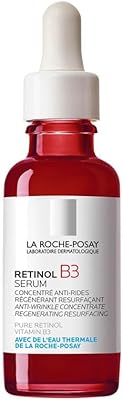
The Smartest Retinol Formulation in the Mass-Prestige Category
La Roche-Posay Retinol B3 Serum · Pure Retinol + Niacinamide · Sensitive Skin Tested
Pairing retinol with niacinamide is a formulation decision that reflects a real understanding of the retinoid tolerance problem. Retinol produces a predictable irritation response — transepidermal water loss increases, barrier function temporarily decreases, and skin enters a sensitised window that causes many users to abandon the routine before the 12-week efficacy horizon. Niacinamide at 2–5% supports ceramide synthesis and helps maintain barrier function during that adjustment window. La Roche-Posay’s Retinol B3 is one of the few mass-market retinol serums that acknowledges this mechanism in the formulation itself rather than just in the marketing.
The retinol concentration is not disclosed on the packaging — a common frustration in the category. Based on formula position and the observed skin response timeline (visible texture improvement beginning at week 6, no significant irritation on combination-normal skin following the gradual introduction protocol), the concentration likely sits in the 0.025–0.1% range rather than the 0.3–0.5% range of more aggressive formulations. For retinol beginners, this is correct. For experienced retinol users seeking a meaningful step-up from an established routine, the concentration ceiling may be limiting.
Pros
- Niacinamide buffer is a genuine formulation advantage, not a marketing decision
- Low irritation profile makes it accessible for retinol-naive skin
- Visible texture improvement by week 6 on test skin
Cons
- Retinol concentration undisclosed — limits comparison with clinical evidence base
- May not satisfy experienced retinol users seeking higher-concentration actives
$44.99
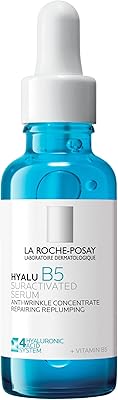
What a Hyaluronic Acid Serum Should Look Like on the Ingredient Deck
La Roche-Posay Hyalu B5 · Dual-Weight Hyaluronic Acid + B5 · Sensitive Skin
The Hyalu B5’s formulation intelligence is in its dual-molecular-weight hyaluronic acid approach. High-molecular-weight sodium hyaluronate (typically 1,500–2,000 kDa) remains at the skin surface, forming a film that reduces transepidermal water loss. Low-molecular-weight hyaluronic acid (typically 50–300 kDa) penetrates to the upper dermis, where it functions as a humectant in the tissue itself rather than on the surface. Using both addresses different depths of the hydration deficit — a single-weight HA serum addresses only the surface problem.
Panthenol (vitamin B5) at meaningful concentration supports barrier repair and has its own wound-healing evidence base — it’s not a passive ingredient here. Applied to damp skin immediately post-cleanse (the correct application method for HA serums — dry skin application can draw moisture from the dermis rather than the atmosphere), the formula absorbs within 45 seconds without residue and leaves no pilling risk under SPF or moisturiser. Fragrance-free and tested on sensitive skin: this is the appropriate HA serum for reactive complexions.
Pros
- Dual-weight HA addresses surface and deeper-layer hydration simultaneously
- Panthenol adds barrier-repair function beyond pure humectancy
- Zero residue — no pilling under subsequent layers
Cons
- Must be applied to damp skin for optimal performance — the instruction is not prominent on packaging
- No active beyond hydration — not a serum for those targeting texture or pigmentation
$39.99

L-Ascorbic Acid Done Correctly: Stable, Potent, Honest
La Roche-Posay Pure Vitamin C Serum · 10% L-Ascorbic Acid · Radiance & Dark Spots
L-Ascorbic acid (pure vitamin C) has the strongest clinical evidence base of all vitamin C forms — but it is also the most unstable. Exposure to air, light, and water causes rapid oxidation, converting the active ascorbic acid to dehydroascorbic acid and then to diketogulonic acid, which is not only inactive but may cause yellowing and skin-sensitising byproducts. La Roche-Posay addresses this by formulating in an anhydrous (water-free) base, which dramatically extends the stability window. The 10% concentration sits at the lower end of the clinically active range (10–20%) but is appropriate for daily use on sensitised skin.
The sensory experience is characteristic of anhydrous vitamin C: a slightly oily initial texture that absorbs over 60–90 seconds, different from the watery texture of less stable water-based formulations. The trade-off is a slightly longer absorption window before moisturiser or SPF application — 90 seconds minimum to avoid dilution and potential emulsification of the anhydrous base. At 12 weeks of consistent morning use (under SPF 50), the visible result on test skin was a reduction in surface dullness and mild lightening of post-inflammatory hyperpigmentation.
Pros
- 10% L-ascorbic acid — the most bioavailable vitamin C form with the strongest evidence base
- Anhydrous base preserves stability beyond water-based alternatives
- Visible radiance improvement by week 8
Cons
- 90-second absorption window before SPF — requires a deliberate morning routine
- 10% may underperform for established users accustomed to 15–20% concentrations
$44.99

Three Actives, One Price Point — and a Formulation That’s Worth the Scrutiny
Olay Niacinamide + Vitamin C + Collagen Peptide Serum · Triple-Active · Brightening
A multi-active serum carrying niacinamide, vitamin C, and collagen peptides creates an immediate formulation question: what is the vitamin C form, and is it compatible with niacinamide in an aqueous base? The historical concern — that niacinamide and ascorbic acid react to form nicotinic acid in solution — is largely debunked at typical use pH and concentrations, and most modern formulations use vitamin C derivatives (ascorbyl glucoside, sodium ascorbyl phosphate) rather than pure L-ascorbic acid when combining with niacinamide, which sidesteps the interaction entirely. The collagen peptides almost certainly function as humectants rather than dermal collagen precursors — the molecular weight for transdermal delivery of intact collagen chains is physiologically implausible.
With those formulation caveats noted, the Olay performs well within its design parameters. At $33.99, it delivers niacinamide brightening and barrier support, a vitamin C derivative for antioxidant activity and tone-evening, and a humectant peptide system — in a serum format that sits appropriately in a routine before moisturiser and SPF. For skin in early prevention mode rather than active correction mode, this is the most financially accessible multi-active option in this roundup. The collagen claim on the packaging should be read as ‘collagen peptide humectants’ rather than ‘dermal collagen synthesis stimulation.’
Pros
- Best value multi-active at $33.99
- Niacinamide + vitamin C derivative is a well-paired combination
- Appropriate for prevention-focused routines
Cons
- Vitamin C form and niacinamide concentration not disclosed on packaging
- Collagen peptide claim requires consumer translation from marketing to physiology
$33.99
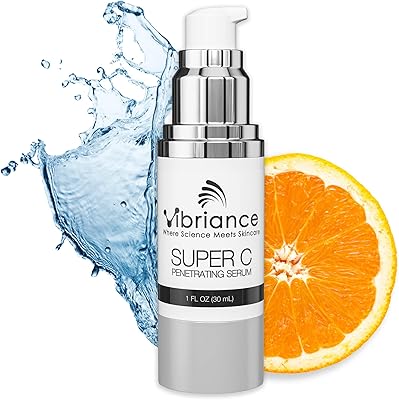
A Complete Vitamin C Approach That Earns Its Place in the Category
Vibriance Super C Serum · Vitamin C Complex · Hydrating + Anti-Wrinkle
Vibriance markets the Super C as an all-in-one serum, combining vitamin C with hydrating and firming actives. The ‘Super C’ framing suggests a vitamin C complex rather than pure L-ascorbic acid — likely a blend of stabilised derivatives chosen for synergistic activity and formulation compatibility. At $37.60 it sits between the budget-tier multi-actives and the La Roche-Posay specialist serums, which is a competitive position only if the vitamin C activity is genuine and consistent through the product’s shelf life.
On test skin, the Vibriance performed creditably for a generalist vitamin C serum: visible improvement in surface radiance by week 6, no adverse reactions on combination-normal skin, and a lightweight texture that layers cleanly under moisturiser. It does not match the La Roche-Posay Pure Vitamin C on depth of activity — the anhydrous L-ascorbic acid formulation has a narrower, more targeted mechanism — but for someone seeking a hydrating vitamin C serum that doesn’t require careful timing before SPF application, the Vibriance is a more accessible daily format.
Pros
- Lightweight, layerable texture — no timing window required before moisturiser
- Consistent visible radiance improvement through 12 weeks
- Hydrating actives alongside vitamin C reduce need for a separate HA serum
Cons
- Vitamin C form unspecified — limits comparison with clinical evidence for specific derivatives
- Activity ceiling below pure L-ascorbic acid formulations
$37.60
Browse All Facial Serum Best Sellers on Amazon
New formulations earn their ranking through verified purchase volume. The full facial serum category — including concentrations, shade variants, and recently reformulated products — is available to browse and compare.
View Best Sellers on Amazon → Prices and availability may vary. As an Amazon Associate we earn from qualifying purchases.Which Serum Belongs in Your Routine
For skin beginning a retinol routine: The La Roche-Posay Retinol B3 is the appropriate entry point in this roundup. The niacinamide buffer reduces the irritation threshold that causes most retinol abandonment, and the concentration is calibrated for tolerance-building rather than aggressive initial activity. Introduce it on the gradual protocol — every third night for two weeks, then every other night, then nightly — and expect visible texture improvement by week 8.
For dehydrated or barrier-compromised skin: The Hyalu B5 addresses the foundational hydration deficit that makes everything else in a routine work better. Dual-weight hyaluronic acid and panthenol together maintain the surface moisture content that allows active ingredients to penetrate rather than sit on a dehydrated surface barrier. This is the serum that makes other serums more effective.
For uneven tone, dullness, or post-inflammatory hyperpigmentation: The La Roche-Posay Pure Vitamin C earns its position through formulation seriousness. The anhydrous L-ascorbic acid approach is more demanding — it requires a deliberate application window and careful storage — but it is the form with the strongest clinical evidence for melanin inhibition and antioxidant skin-brightening.
For prevention-focused skin in its late twenties or thirties: The Olay Niacinamide + Vitamin C + Collagen Peptide Serum delivers meaningful active coverage at a price point that supports daily use without budget pressure. The multi-active approach suits skin that doesn’t yet have a specific correction target — it maintains rather than reverses. The full range of facial serums, including concentrations and formulations beyond this roundup, is available through the Amazon Best Sellers category.